










|
Tennis News –
Ukraine's number one tennis player, Elina Svitolina, spoke exclusively to BTU about her recent victory at the tournament in Rouen, her impressions of switching to a new racquet, the challenges of doping control, and the support she receives from Gael Monfils."The transition from hard to clay is the toughest for me" - Elina Svitolina on her Rouen title, new racquet, doping control realities, and more | BTU Exclusive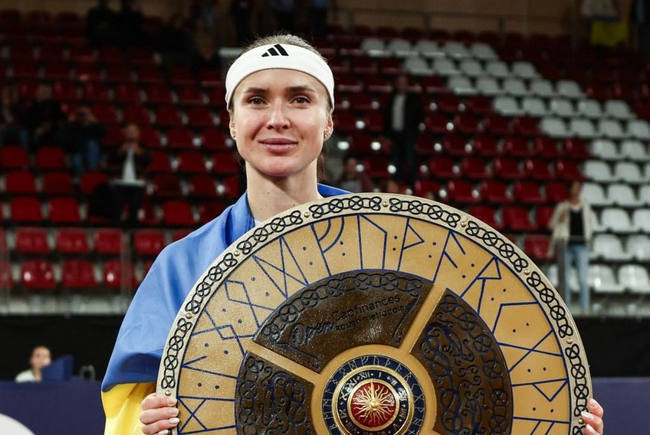 – Elina, first of all, congratulations on your victory in Rouen! You've won seven consecutive matches on clay, including two for Ukraine's national team and the title in Rouen, without dropping a single set. What emotions do you have after such a strong start to the clay-court season? – It’s definitely been a great start to the clay season for me. I'm very happy I had some extra time to prepare, because the transition from hard to clay is always the toughest for me. Clay engages a lot of smaller muscles—especially in the legs—that you typically don't use as intensely on hard courts. When you slide for a ball or stretch to reach it, you’re working muscles that can easily get overstretched, causing minor inflammation. Given that the clay schedule is very intense—with tournaments like Stuttgart, Madrid, Rome, and Roland Garros—you’re constantly pushing your body to its limits. That’s exactly why I’m glad I chose to play in Rouen. It gave me an opportunity to play several matches, build up my confidence, and fully transition onto clay. For instance, in Stuttgart, even your first or second round can immediately put you against a top-10 or top-20 player. Another factor was my physical condition—I’m trying to stay in peak form right now. Also, my victories at Indian Wells and Miami didn't come easily, and I wanted to fine-tune my game to not just win matches, but to really dominate on court. Considering all these factors, my coach and I felt that playing in Rouen would be an ideal decision, and that proved exactly right. – In Rouen, you won your first career title without dropping a single set, and overall, the tournament went quite smoothly for you. Perhaps only in the final were there some difficulties, which you successfully overcame. What was the secret behind such a confident performance throughout the week? – Both at the Billie Jean King Cup matches and in Rouen, I managed to maintain a very consistent level of play, and I’m pleased with that. Keeping my game consistently high is always the most important thing for me. Of course, national team matches naturally come with added nerves, just like the finals—they always have their own special dynamics. Overall, I’m satisfied with how I handled these situations and maintained control over my level. In Rouen, some opponents played beyond their usual level, especially during the first sets. I’m happy I managed to hold steady in those moments, find solutions, and eventually take control of the matches in the second sets. The final against Danilovic was pretty tight. In the first set, I managed to slightly disrupt her rhythm, but in the second, she served extremely well. I really had to stay sharp and stick strictly to my tactics. Ultimately, it all came down to just a few points, but that’s often how finals are—every single point becomes crucial. 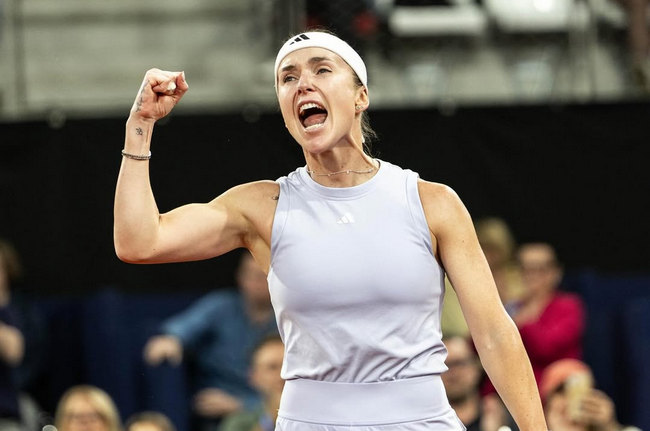 – You played two consecutive indoor clay tournaments. Is there any difference in how clay tennis feels indoors compared to outdoors? – Definitely. Playing indoors and outdoors in tennis feels quite different overall. Actually, every tournament has its unique characteristics. Even if you take, for example, Madrid and Rome—both outdoor clay tournaments—there are still noticeable differences between them. The surface conditions, weather, type of balls—all these factors affect the way the ball moves and bounces. Each tournament requires adapting to its specific conditions and details. It's similar when comparing indoor and outdoor matches—you always have to adjust accordingly. – This week you’re playing in Madrid—a tournament that historically hasn’t been particularly successful for you. Coming off busy weeks with the national team and your victory in Rouen, do you have any expectations or goals for this event? – Yes, unfortunately, Madrid has never really clicked for me in the past. We've tried various approaches and adjustments, trying to find the right rhythm here, but somehow it just hasn't come together. Honestly, I'm not sure why—we've discussed it a lot with my coach, but we haven't been able to pinpoint exactly what's missing. Still, each year I try to start the tournament fresh and not dwell on past disappointments. I've had some matches here where I played very solid tennis, and I try to focus only on these positive moments. I think I have a better chance this time to show a good performance, but we’ll see—every year is different. – Parallel to the tournament in Rouen, the Stuttgart event was underway, featuring the top favorites of the clay season—and probably beyond. Did you follow that tournament? Were you surprised by Ostapenko's victory and how she managed to handle Iga Swiatek and Aryna Sabalenka? – Yes, I kept an eye on Stuttgart—I was checking the results regularly. It's always a very competitive tournament, and it's interesting to see how everyone starts their clay-court season. Ostapenko played extremely well. She's definitely capable of producing exceptional tennis. I don't think it's a coincidence that she holds a Roland Garros title on this surface. Therefore, for me, it wasn't surprising that she managed to beat both Swiatek and Sabalenka. – At the start of the season, you began playing with a new racquet. Back in Australia, you mentioned it had been custom-built to meet your specific needs. Four months in—what’s your impression now? Have you made any additional changes, or are you happy with how it performs on court? – I’m very happy with it. We haven’t made any changes since it was customized for me back in December—I’m playing with it exactly as it was set up. The only thing we’re adjusting slightly is the stringing: we’re experimenting with tension depending on the tournament conditions. It’s a very different string tension compared to what I used to have with Wilson. But other than that, I really like everything about it. I think you can see that in my matches and results—things seem to be going pretty well so far (laughs). – In Madrid, you posted a photo of you and Gaël going through doping control together. Lately, this topic has returned to the spotlight after the ITIA reminded players they’re not allowed to shower after a match without a chaperone if they haven’t yet provided a sample. Have you ever had any uncomfortable experiences with doping control? How difficult or invasive is the whole process—being constantly monitored and “on display”? - Doping is an unpleasant topic for any athlete. You have to think about it every single day - filling in your whereabouts, making sure you’re available for testing at any moment. You’re required to list a specific time when you’ll definitely be at home - usually early in the morning to make sure you’re there. And when you’re selected for doping control after a match, they literally follow your every step. They even watch you shower - to make sure you don’t pee there by accident (laughs). Then they trail you until you finally give a sample. It’s very uncomfortable, especially when the person doesn’t know you and stands just a meter away while you’re trying to go. It’s awkward, to say the least. Sometimes I wake up at 8 a.m. knowing they might show up at 9. And I have to hold it in - because if I go too early and they don’t come, then I’ll be stuck waiting hours to give another sample. So it’s always on your mind.  There are also cases of people getting caught because of contaminated supplements or food - like meat in Mexico or China that contains hormones. Even something as simple as a vitamin or face cream has to be checked. I once bought a regular pharmacy cream for dry skin. When I asked the doctor if it was safe, he told me I could only use it off-tournament. During a competition, that cream could trigger a positive result. Can you imagine? A basic over-the-counter cream. Things have become absurd. The rules have gotten stricter, and the tests more sensitive. Sometimes even trace amounts can lead to a positive test. It’s mentally exhausting. You can’t take anything for granted - you always have to stay alert because anything can happen. – Recently, Gael shared a touching story about how you quite literally saved his career when he lost his passion for tennis during the COVID break. Now, both of you have titles this season and are playing great tennis. What drives you at this stage of your career? – I’m really happy I’ve been able to support Gaël, but he helps me just as much. I think that’s completely natural—we’ve both been on tour for many years, we have the experience, and we’re still competing at a high level. We share a very similar outlook on tennis, so we understand each other and know how to say the right thing when it’s needed.  Motivation is one of those things you constantly have to “feed”—you need to keep throwing wood on the fire. One day it’s there, the next day it might vanish. The schedule is packed with tournaments, matches, constant work. There are periods where things don’t go your way, and that’s when motivation can really start to fade. That’s why it’s so important to have someone by your side who truly understands you and knows how to find the right words to lift you back up. |
Уважаемый посетитель, Вы зашли на сайт как незарегистрированный пользователь. Мы рекомендуем Вам зарегистрироваться либо зайти на сайт под своим именем.





Зустрінуться наші дві красуні!!!